
Teaching Badly #0
Introductions: A few personal notes

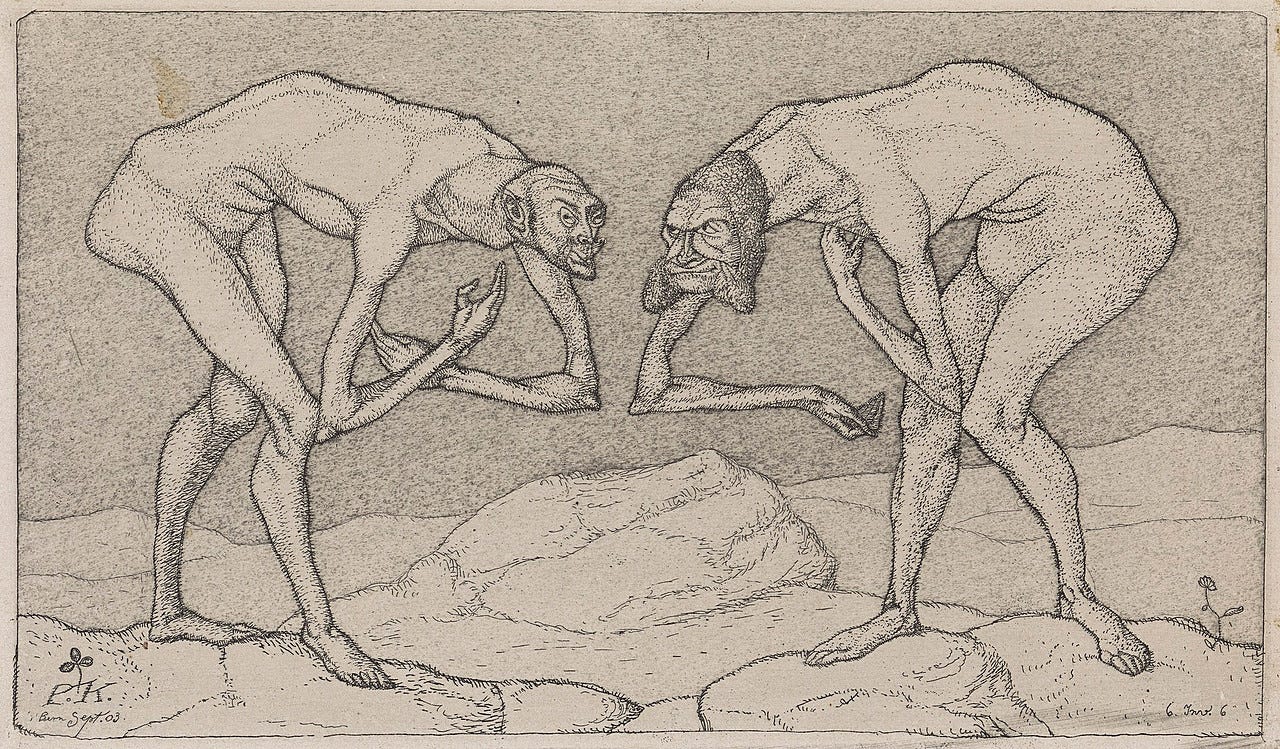
You’re currently reading the first (of maybe many, maybe several, maybe one; I can’t promise follow-through, either for laziness or embarrassment) post of Teaching Badly. Thanks for doing that! Blogging and introductions can feel unavoidably narcissistic, so I’ll try to minimize this impression, by not luxuriating here and moving into the meat.
What is “teaching badly”? A new series!
Unless we’re lamenting various environmental factors (e.g. institutional deficiencies) or commiserating about other difficulties, talking about one’s teaching practice involves articulation and justification of choices, making the speaking teacher usually sound both competent and proud. I’ve noticed this in myself and others, and occasional self-congratulation has a place in helping us stick with the work — which is not nothing, as 44% of teachers quit within their first 5 years. However, the laments and self-congratulations belong in the breakroom, where the words can immediately dissipate, not in writing. For reasons I’ll develop below, I especially do not want to claim competence or elide difficulties. Instead, this series will look to develop and trace the faults along and through which teaching takes place. To preview, this may include posts exploring my own personal inexperience, the conflict between education’s role in social reproduction and individual educators’ aspirations for social transformation, and a critique of lesson planning.
A second valence of the series’ title comes from the books of bell hooks, namely Teaching Critical Thinking and Teaching Community. Here, the reference situates the blog in the tradition of educational theory, with which I believe teachers must conceive their work forming a dialectic: as it is with theory and practice, so must it be with educational theory and educational practice. If this sounds prideful, know that the reference also shames me: I’ve not read either of the named books, and only pieces of Teaching to Transgress. At this point, I’m still under-read and far from familiar with the field (again, see below), and this is the third significance of the reference, since if hooks, with her deep historical and personal knowledge could teach “Critical Thinking” or “Community”, then at this point the best I can hope is to teach “badly”. Maybe in the future I’ll be able to name a series, “Teaching Well”, but I won’t get ahead of myself.
Who am I? The new guy!
I’m just a “first-year” teacher, so, despite my over-serious tone, nothing I say here should be taken authoritatively. To give myself a tad more credit, I’m a first-year certified teacher: I completed a year of relatively independent student-teaching last year, and for 5 years before that I taught in various, un(der)qualified capacities. Everything here is provisional at best, and more likely than not false; pedagogy is largely learned experientially, and I’m lacking that experience. Nonetheless! I write and hope you’ll read!
I am starting this blog for two articulable reasons. First, the weaker (at least for you readers) is my own self-improvement. Experience alone is a weak source of learning, but reflection thereon helps, so this blog will in some ways be a place for me to metabolize my teaching experiences into learning. Additionally, I wager that the wrong thought should still be said. When (or if) I get the time to write a long post explaining my choice to name this overall page The Mousetrap with my disorganized thoughts on the use of talking about literature, then I hope to elaborate this. For now, suffice it to say, that if what I think needs to be corrected, then I hope by putting the thought into the world, it will find readers generous enough to correct it.
The second reason is to take part in the discourse of educational theory, with interlocutors already therein, and also calling others to join. Here, I hope to say a few things that might encourage friends and others to think more deeply about teaching; for instance, my intended critique of lesson planning and backwards design won’t be its death, but a few readers might feel better about “underpreparing”, or a few readers might deepen their appreciation for those tools by having to re-justify them. In spite of myself and my doubts, I’ll try as much as possible to speak confidently and directly from here on out, to make my hypotheses operative, and see where they go.
What now? Subscribe!
As a full-time teacher starting this blog and series in the middle of a term, I can’t promise regular updates. If any of this interests you, subscribe, so you can see my posts immediately in your inbox and read them at your earliest convenience, rather than at a later convenience.